As the summer sun warms Davis County, the allure of outdoor living becomes undeniable. For homeowners in Kaysville, a well-designed deck isn’t just an amenity; it’s an extension of their living space, a hub for family gatherings, quiet relaxation, and vibrant summer entertaining. Building or renovating a deck is a significant investment, and making informed decisions about materials, design, and features can dramatically impact its longevity, aesthetics, and the value it adds to your home.
At Quality First Construction, we specialize in creating stunning, durable, and functional outdoor decks that perfectly suit the unique climate and lifestyle of Utah. Let’s delve into the key considerations for decking out your Kaysville home for summer.
Decoding Decking Materials: Wood vs. Composite
The first and often most crucial decision you’ll make is choosing your decking material. The market is primarily dominated by wood and composite options, each with distinct advantages and considerations.
1. Wood Decking: The Timeless Classic
Wood offers a natural aesthetic, warmth, and a connection to the outdoors that many homeowners adore.
- Types:
- Pressure-Treated Lumber: The most common and budget-friendly option. It’s chemically treated to resist rot, decay, and insect infestation, making it suitable for outdoor use.
- Cedar & Redwood: Naturally resistant to rot and insects, these woods offer beautiful natural colors and grain patterns. They are generally more expensive than pressure-treated lumber.
- Tropical Hardwoods (e.g., Ipe, Tigerwood): Extremely dense, durable, and naturally resistant to rot and insects. They boast rich, exotic colors but come at a premium price and can be harder to work with.
- Pros:
- Initial Cost: Generally lower upfront cost compared to composite. Pressure-treated wood can range from $3 to $8 per square foot for materials alone, while cedar/redwood are higher. (A G Vinyl Fencing)
- Natural Aesthetics: Authentic wood grain and feel.
- Customization: Can be stained or painted to match your home’s exterior or personal preference.
- Repairability: Individual boards can often be replaced more easily than composite.
- Cons:
- Maintenance: Requires significant ongoing maintenance. Wood decks typically need to be cleaned, sanded, sealed, or stained every 1-3 years to protect against moisture, UV damage, warping, splintering, and rot.
- Lifespan: With proper maintenance, wood decks generally last 10 to 20 years. Neglecting maintenance can significantly shorten this. (Envision Outdoor Living Products)
- Susceptibility: Prone to splintering, cracking, warping, and can be attractive to pests like termites if not properly treated and maintained.
2. Composite Decking: The Low-Maintenance Champion
Composite decking is an engineered product typically made from a blend of recycled wood fibers and plastic polymers. It’s designed to offer the look of wood with superior durability and minimal upkeep. The plastics & composites segment is projected to grow rapidly, with a CAGR of 6.3% from 2025 to 2033, reflecting its increasing popularity. (Grand View Research)
- Pros:
- Low Maintenance: Requires virtually no staining, sealing, or painting. A simple annual cleaning with soap and water is usually sufficient. This translates to significant long-term savings in time and money. (Envision Outdoor Living Products)
- Durability: Highly resistant to rot, insects, splintering, warping, and fading.
- Lifespan: Composite decks typically last 25 to 30 years or more, often coming with warranties to match. (Envision Outdoor Living Products) Some high-quality capped PVC boards can last 50+ years. (TimberTech)
- Variety: Available in a wide range of colors, textures, and finishes, many mimicking natural wood.
- Eco-Friendly Options: Many composite brands use recycled materials, appealing to environmentally conscious homeowners.
- Cons:
- Initial Cost: Generally higher upfront cost. Composite decking materials typically range from $9 to $16 per square foot, with installed costs potentially reaching $30-$60 per square foot including labor. (A G Vinyl Fencing)
- Heat Retention: Some composite boards can retain more heat than wood in direct sunlight, though technological advancements are addressing this.
- Repairability: If a board gets damaged, it can be harder to replace seamlessly.
Cost Comparison & Long-Term Value: While wood has a lower initial cost, the long-term maintenance expenses for a wood deck can average $700 to $1,000 annually. Over a 10-year period, a composite deck can often end up costing about the same or even less than a wood deck when maintenance is factored in. (Envision Outdoor Living Products, Heartland Decks)
Designing Your Outdoor Oasis: Beyond the Flat Rectangle
Once you’ve chosen your materials, the design possibilities are endless. Don’t limit yourself to a simple square; consider how design elements can enhance functionality and aesthetics.
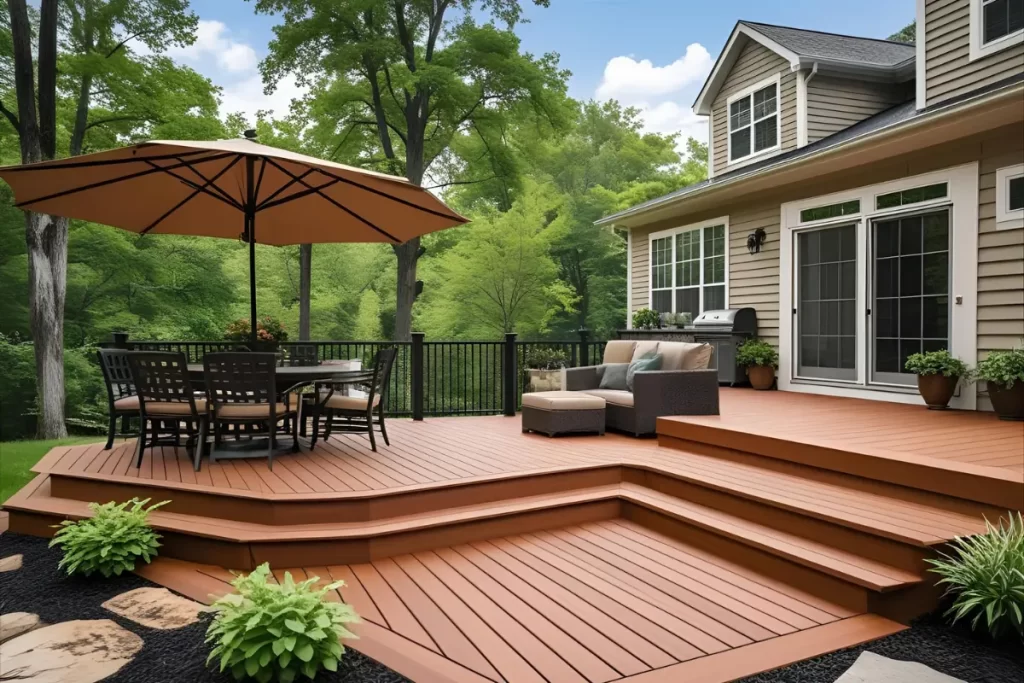
1. Multi-Level Decks: Dynamic Zones & Sloped Solutions
For homes with sloped yards or a desire for distinct outdoor “rooms,” multi-level decks are an excellent solution.
- Benefits:
- Maximizes Space: Especially effective on sloped lots, allowing you to utilize otherwise unusable terrain.
- Creates Distinct Zones: Different levels can be designated for specific functions: a dining area off the kitchen, a lounge area for relaxation, a hot tub zone, or even a quiet reading nook. This zoning provides privacy and optimizes flow.
- Boosts Visual Appeal: Adds dimension, depth, and architectural interest to your backyard, making it feel more expansive and custom.
- Seamless Transitions: Bridges the gap between your home and the yard, providing gradual steps down to different areas.
- High Potential for Customization: Each level can have unique features, lighting, and furniture.
- Increased Home Value: A well-designed multi-level deck offers a high-end, custom-built feel that significantly appeals to potential buyers. (North Georgia Elite Decks)
- Design Considerations: Ensure logical flow between levels, ample steps or ramps for accessibility, and consistent material choices for a cohesive look.
2. Railings: Safety Meets Style
Deck railings are essential for safety (required for decks over 30 inches above grade in Davis County, see FAQ) but also offer a significant opportunity for design flair.
- Wood Railings: Classic and customizable (paintable/stainable). Can range from simple picket styles to more elaborate designs.
- Composite/PVC Railings: Low-maintenance, durable, and available in various styles and colors to match composite decking. Many offer integrated “drink rails” on top.
- Metal Railings (Aluminum, Steel, Wrought Iron):
- Aluminum: Lightweight, rust-resistant (especially powder-coated), low-maintenance, and offers a sleek, modern look. Often used with cable infill for unobstructed views.
- Steel: Very strong and durable, but requires more maintenance to prevent rust.
- Wrought Iron: Timeless and ornate, though true wrought iron is heavy and rust-prone; powder-coated aluminum often mimics the look.
- Glass Panel Railings: Provide an unobstructed view, ideal for properties with scenic vistas. Offer a high-end, contemporary aesthetic but require more cleaning.
- Cable Railings: Thin stainless steel cables strung horizontally or vertically offer a minimalist, modern aesthetic and maintain views.
3. Built-in Features: Enhancing Functionality & Appeal
Built-in features integrate seamlessly with your deck’s design, adding functionality, comfort, and a custom feel.
- Built-in Seating: Benches integrated into the deck perimeter save space, provide ample seating for guests, and create a cohesive look. They can also incorporate hidden storage.
- Planters: Integrated planters allow you to bring greenery, flowers, and even herbs directly onto your deck, softening the edges and adding vibrant color.
- Lighting:
- Post Cap Lights: Decorative and functional, illuminating the perimeter.
- Stair Riser Lights: Essential for safety and ambiance on steps.
- Under-Rail Lighting: Creates a subtle glow and highlights the deck’s edges.
- Recessed Deck Lights: Small, flush lights embedded in the deck surface for path lighting.
- Outdoor Kitchens/Grilling Stations: Beyond a portable BBQ, a built-in grilling area with counter space, storage, and even a sink or refrigerator transforms your deck into a true outdoor culinary center.
- Fire Pits: An integrated fire pit creates a natural gathering spot, extending the usability of your deck into cooler evenings.
- Pergolas or Awnings: Providing shade (or rain protection for covered patios), these structures define areas and enhance comfort.
ROI of Decks & Built-in Features: Adding a deck is a strong investment. The 2024 Cost vs. Value Report (Zonda) suggests that a mid-range wood deck addition can recoup around 70% of its cost, while a composite deck addition might recoup about 65%. Built-in features, such as seating, planters, and lighting, enhance a deck’s longevity and market appeal, contributing positively to value. (New Jersey Real Estate Network)
Navigating Permits & Codes in Davis County
Before embarking on your deck project in Kaysville or anywhere in Davis County, it’s crucial to understand local building codes and permit requirements.
- Permit Requirement: In Kaysville, a building permit is required for decks. Generally, any new deck, or a deck over 30 inches above grade, or one attached to the home, will require a permit.
- Kaysville City Building Department: You can find specific requirements and download permit applications through the Kaysville City Building Department website. They generally require two sets of plans (to scale), a site plan, and potentially engineering calculations. The plan check process can take 3 to 4 weeks. [Source: Kaysville City Building Permits website]
- Davis County Regulations: For properties in unincorporated Davis County, building permits are also required for decks exceeding 200 square feet or those that are more than 30 inches above grade. Utah Code Section 15A-3-202 also outlines state-level amendments to the International Residential Code (IRC) regarding deck height and guardrail requirements. [Source: Davis County Building Permits website, Utah Code]
- Safety Standards: Decks must be designed for a 40-pound per square foot live load. Guardrails are required for decks over 30 inches above grade and must be at least 36 inches high, with openings preventing a 4-inch sphere from passing through. (Clinton City Deck Handout, representative of common Utah standards).
- Our Role: Quality First Construction is well-versed in Davis County’s building codes and will handle all necessary permits and inspections, ensuring your deck is built safely, legally, and to the highest standards.
FAQs about Decking for Kaysville Homeowners
How long does it take to build a new deck?
The timeline varies depending on the size, complexity, and materials chosen. After permits are approved (which can take 3-4 weeks in Kaysville), construction for an average-sized deck can range from 1-4 weeks. Larger, more complex multi-level decks with built-in features may take longer.
Will a new deck increase my home’s value?
Yes, a well-designed and properly constructed deck is a solid investment. As noted above, wood decks typically recoup around 70% of their cost, and composite around 65%, according to national averages. In a market like Davis County where outdoor living is highly valued, a quality deck can be a significant selling point.
Can I build a deck myself, or should I hire a professional?
While some small, simple, low-to-grade decks might be considered DIY, larger or attached decks involve complex structural engineering, safety considerations, and navigating local building codes and permits. For safety, durability, and to ensure proper ROI, hiring a professional like Quality First Construction is highly recommended. We ensure proper footings, ledger board attachment, load-bearing capacity, and compliance with all regulations.
What is the best decking material for Utah’s climate?
Both pressure-treated wood and composite decking can perform well in Utah’s climate. Composite excels in durability and low maintenance, standing up well to UV exposure and temperature fluctuations without warping or cracking as easily as wood. If choosing wood, proper sealing and regular maintenance are crucial to protect against the dry heat and winter moisture.
How do I choose the right size and location for my deck?
Consider how you plan to use the deck (dining, lounging, entertaining), the size of your household, and the available space in your yard. Think about sun exposure throughout the day, privacy from neighbors, and convenient access from your home (e.g., off the kitchen or living room). A general guideline suggests a deck should cover about 10% to 20% of your home’s square footage for optimal aesthetic value without overwhelming the yard. (New Jersey Real Estate Network)
This summer, transform your Kaysville backyard into the ultimate outdoor living destination. Whether you envision a sprawling multi-level composite deck or a charming cedar patio, Quality First Construction has the expertise to bring your vision to life, ensuring a beautiful, functional, and valuable addition to your home. Contact us today to begin planning your perfect summer deck.